2024 Scientific Journeys at the University of Lisbon

The 2024 Scientific Journeys at the University of Lisbon will be held on June 25 in the Noble Hall of the University’s Rectory, focusing on “The Current and Future Impact of Artificial Intelligence on Work.”

As digital technologies become increasingly prevalent, AI emerges as a transformative force revolutionizing how we work, communicate, and interact. This event will provide an interdisciplinary dialogue space to discuss AI’s multifaceted implications for work, addressing ethical, social, and economic consequences. Topics include the impact on education, employment, governance, and society, as well as necessary changes in educational policies and workforce preparation.

Various perspectives on AI’s use across professional fields, from arts to technology, will be debated, highlighting innovation and ethical challenges. The event features an opening lecture, a panel discussion, and an interactive session, aiming to foster debate on how AI can drive progress, promote well-being, and enhance efficiency while ensuring inclusive and sustainable development.

Completion of the KHIONE Project Expedition Through West Antarctica

On March 3, the mission of the KHIONE project aboard the polar expedition ship Le Commandant Charcot ended. The project aimed to test (1) citizen science as a tool to collect and share relevant scientific data from marine and terrestrial ecosystems and the cryosphere; (2) the application of citizen science as a value-added tool to promote the environmental awareness and sensitivity of cruise passengers. The project was partially funded by the POLAR2E college, and counts with a multidisciplinary team form the college including researcher from CEG-IGOT, MARE-FCUL and DEQ/IST.

The expedition, which began on February 6, was attended by Paula Matos (project coordinator) and Margarida Queirós, CEG/IGOT-ULisboa researchers, and departed from Lyttelton, New Zealand, towards Ushuaia, Argentina, along the east coast of Antarctica.

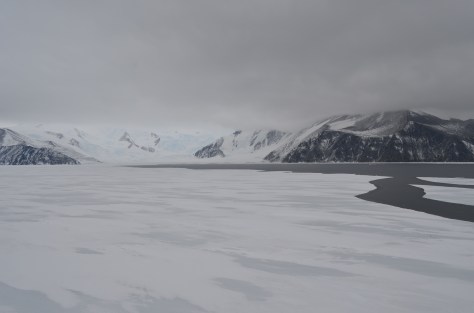
During the 12800 km traveled, the researchers conducted a multidisciplinary research, combining scientific sampling of marine microalgae and physicochemical characteristics of seawater, terrestrial vegetation and soil, and characteristics of the marine and terrestrial cryosphere and citizen science done by the ship’s passengers. 

Despite the multiple sea storms that difficulted the work, and the adverse weather conditions at land, such as the -30ºC felt, the more than 500 samples collected prove the success of the mission.

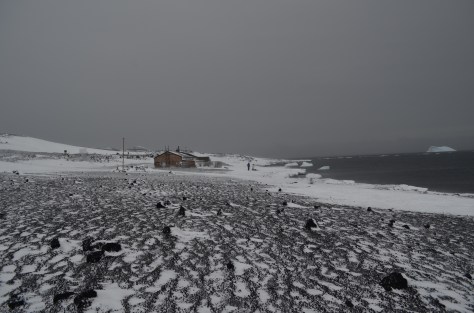
The mission included sampling at iconic sites in Antarctic history, such as Cape Royds and Evans, where the huts that served as the base camp of the British Antarctic Expedition in the early 20th century to explorers Shackleton and Scott, respectively, are located. The samples are already being processed at ULisboa.